
What is the meaning of work in people’s lives today? Can it still be a place of personal fulfilment, and not merely of performance? These are some of the questions at the heart of the cultural project “Il gusto del quotidiano. Lavoro e compimento di sé da San Benedetto ad oggi”, part of the 2026 Culture Month promoted by the Municipality of Lanciano, which concluded yesterday evening, 10 May, with a conference dedicated to this topic.
Hosted at the Santo Spirito Museum Complex, the exhibition offered an immersive experience aimed at retracing the history of Benedictine monasticism as a model capable of bringing together work, organisation, responsibility and human development, placing it in dialogue with the challenges of the present day.
A cultural project looking to the present
Drawing on the Benedictine tradition and the well‑known motto Ora, Lege et Labora, the exhibition invited visitors to reflect on the value of work today, within a context marked by fragmentation, speed and new forms of vulnerability. The abbeys, presented as places of innovation, knowledge and social organisation, become the starting point for a contemporary reflection: is it still possible to experience work as a source of meaning and personal fulfilment?
Alongside the exhibition itinerary, the project also included a series of in‑depth meetings featuring contributions from a range of voices from the religious, academic, scientific and entrepreneurial spheres.
Honda’s contribution to the discussion
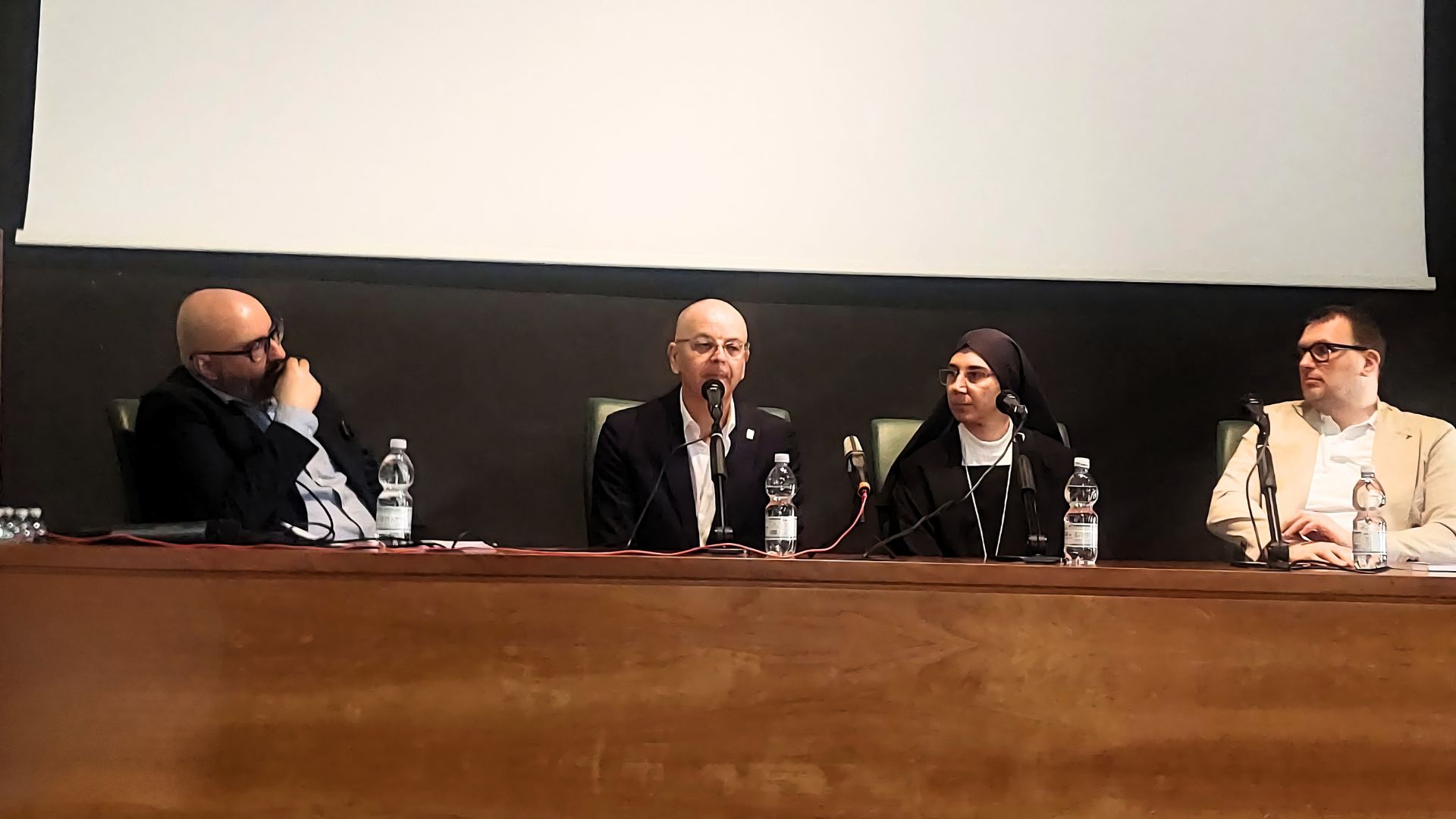
Within this framework, yesterday’s meeting, held on Sunday 10 May and entitled “Ora, Lege et Labora. La differenza come risorsa, non come problema”, took place, bringing together several speakers invited to share their perspectives on the relationship between work, the individual and the community.
Among the guests was Marcello Vinciguerra, Managing Director of Honda Italia Industriale, who shared the testimony of a contemporary industrial experience deeply rooted in the local area and strengthened by 55 years of history—an organisation that on a daily basis engages with issues such as work organisation, safety, sustainability, process quality and the enhancement of skills.
At the heart of the speech was the theme of work as a path to personal fulfilment. Starting from the origins and values that guided the founding of Honda, the reflection extended to work as a daily experience shaped by responsibility, method and participation—one in which people are called upon to express their contribution and find meaning in what they do. A concrete example of how, through work, it is possible to combine personal growth, quality and self‑realisation, generating a positive impact on the local area and on the world at large.
A dialogue between different experiences
The value of the initiative lay precisely in the dialogue between different worlds, united by a shared underlying question: how can work once again become a space for growth and responsibility? The experience of business thus stands alongside the monastic, academic and cultural perspectives—without overlapping them, yet contributing to a shared reflection.
Within this exchange, the contribution of those operating in the productive sector and who, over the years, have generated a strong impact on the local area, provided an opportunity to reflect on how principles such as method, attentiveness to people and quality can find concrete application within the complexity of the present day.
Culture, work and local communities
The inclusion of the exhibition and related meetings in the programme of the 2026 Culture Month helped to strengthen the link between the Lanciano area and a broader reflection on the role of work in society.
It offered an opportunity to pause, observe and engage in discussion, moving beyond immediate current affairs and placing once again at the centre the deeper meaning of everyday activities.
An open dialogue, spanning the past and looking to the future, that invites everyone—workers, companies and communities alike—to reflect on the value of their own contribution.